


Your Knowledge Hub for Alzheimer’s and Cognitive Health
Discover insights, expert explanations, and practical tips to help you navigate memory loss, mild cognitive impairment (MCI), Alzheimer’s, and new therapy options like Vguard.
Blog Articles
Stay informed with regularly updated, science-based articles
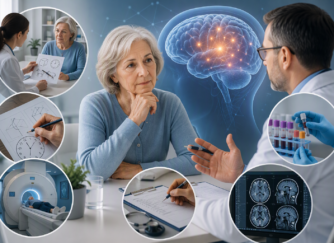
Jak wygląda diagnostyka zaburzeń pamięci? Od pierwszych objawów do diagnozy
Jak wygląda diagnostyka zaburzeń pamięci? Od pierwszych objawów do diagnozy Coraz częściej zapominasz? Sprawdź, co dzieje się [...]
Read more
MCI – Mild Cognitive Impairment: Symptoms, Diagnosis, and the Importance of Early Action
MCI – Mild Cognitive Impairment: Symptoms, Diagnosis, and the Importance of Early Action Are You Forgetting Things More Often and [...]
Read more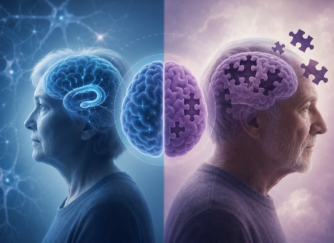
Dementia vs Alzheimer’s Disease — What’s the Difference and When Should You See a Doctor?
Dementia and Alzheimer’s disease are terms that are often used interchangeably. However, they do not mean the same thing. Dementia is [...]
Read moreFrequently Asked Questions
Answers to the most common questions from patients, caregivers, and clinicians
Glossary of Terms
Break down the science with easy-to-understand definitions:
- Biomarker – A measurable indicator of a biological condition or process, often used in diagnosis.
- Amyloid Plaques – Protein deposits found in the brains of Alzheimer’s patients.
- Tau Protein – A protein involved in stabilizing neurons, often misfolded in Alzheimer’s.
- EEG (Electroencephalogram) – A test that records brain wave activity.
- Functional MRI (fMRI) – Imaging that shows brain activity by detecting blood flow changes.
- Stimulation Protocol – A set of parameters for applying therapeutic stimulation.
- Electrode – A conductive device that delivers electrical impulses in neurostimulation.
- Neurocircuitry – Networks of neurons responsible for specific brain functions.
- Sleep Architecture – The structure and pattern of different sleep phases during a night.
- REM Rebound – An increase in REM sleep after periods of sleep deprivation.
- Synaptic Plasticity – The ability of synapses to strengthen or weaken over time
- Cognition – Mental processes such as memory, attention, and problem-solving.
- Executive Function – High-level cognitive skills like planning, decision-making, and multitasking.
- Neurotech – Technology developed to understand or influence brain function.
- Precision Medicine – Customized healthcare based on individual characteristics.
- Cognitive Reserve – The brain’s resilience to damage through flexible cognitive strategies.
- Functional Connectivity – Coordination of activity across different brain regions.
- Actigraphy – A method of monitoring rest/activity cycles using wearable sensors.
- Patient Adherence – The extent to which a patient correctly follows medical advice.
- Safety Profile – A summary of known risks and side effects of a medical intervention.
- Alzheimer’s Disease (AD) – A progressive neurodegenerative disease affecting memory and thinking.
- Dementia – A general term for cognitive decline affecting daily functioning.
- Neurodegeneration – Gradual loss of neuron structure or function, often leading to dementia.
- Non-Invasive Therapy – A treatment that doesn’t require surgery or skin penetration.
- Clinical Trial – A research study to test medical, surgical, or behavioral interventions in humans.
- Double-Blind Study – A clinical study where neither participants nor researchers know who receives the actual treatment.
- Placebo-Controlled Trial – A trial that compares a treatment to an inactive substance.
- Electrode-Skin Interface – The contact point in a medical device where stimulation is applied.
- Neuroplasticity – The brain’s ability to reorganize and form new neural connections.
- Cognitive Decline – A deterioration in cognitive function such as memory and reasoning.
- Neurostimulation – The use of targeted electrical pulses to modulate nervous system activity.
- Auricular VNS – Vagus nerve stimulation delivered through the outer ear.
- Digital Health Platform – A technology-based system for remote patient care and monitoring.
- Breakthrough Device (FDA) – A designation for innovative devices offering substantial benefits.
- Pilot Study – A small-scale preliminary study to test feasibility, time, and cost.
- Pivotal Study – A confirmatory trial used to support regulatory approval.
- Hippocampal Theta Activation – A type of brain wave activity linked to memory, induced via stimulation.
- Memory Consolidation – The neurological process of converting short-term memories into long-term storage.