


A Science-Based Method Backed by Years of Research
The Scientific Foundations of Vguard Therapy
From the Neurophysiology of Memory to Medical Technology
Vguard was developed through a long-term research program combining memory neurophysiology, medicine, and biomedical engineering. The research focused on the effects of vagus nerve stimulation on hippocampal activity and theta rhythm, which is associated with memory processes.
The technology development program included neurophysiological and preclinical studies, as well as a clinical evaluation conducted as a randomized, double-blind, placebo-controlled medical experiment.
The findings from this research were used to develop Vguard, a non-invasive neuromodulation technology applied during sleep and intended for use in the treatment of Alzheimer’s disease and mild cognitive impairment.
Scientific Basis and Technology Assessment
- The technology development program included more than five years of preclinical research investigating the effects of vagus nerve stimulation on brain activity.
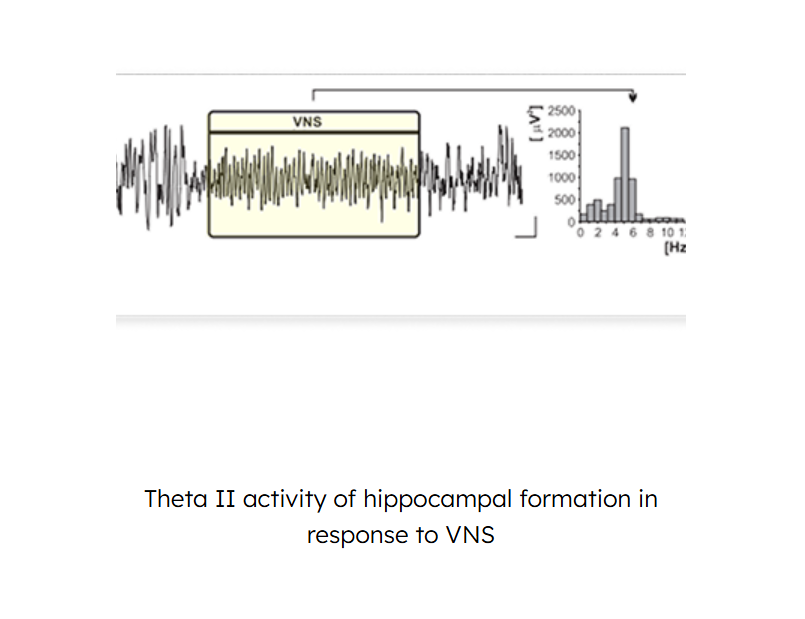
- Neurophysiological studies demonstrated the effects of vagus nerve stimulation on type II theta rhythm in the hippocampus.
- The scientific basis of the technology has been described in more than 10 publications in peer-reviewed scientific journals.
- Vguard is a Class IIa medical device, CE marked in accordance with the MDR. The conformity assessment was conducted with the involvement of TÜV Rheinland LGA Products GmbH, Notified Body No. 0197.

How does Vguard work?
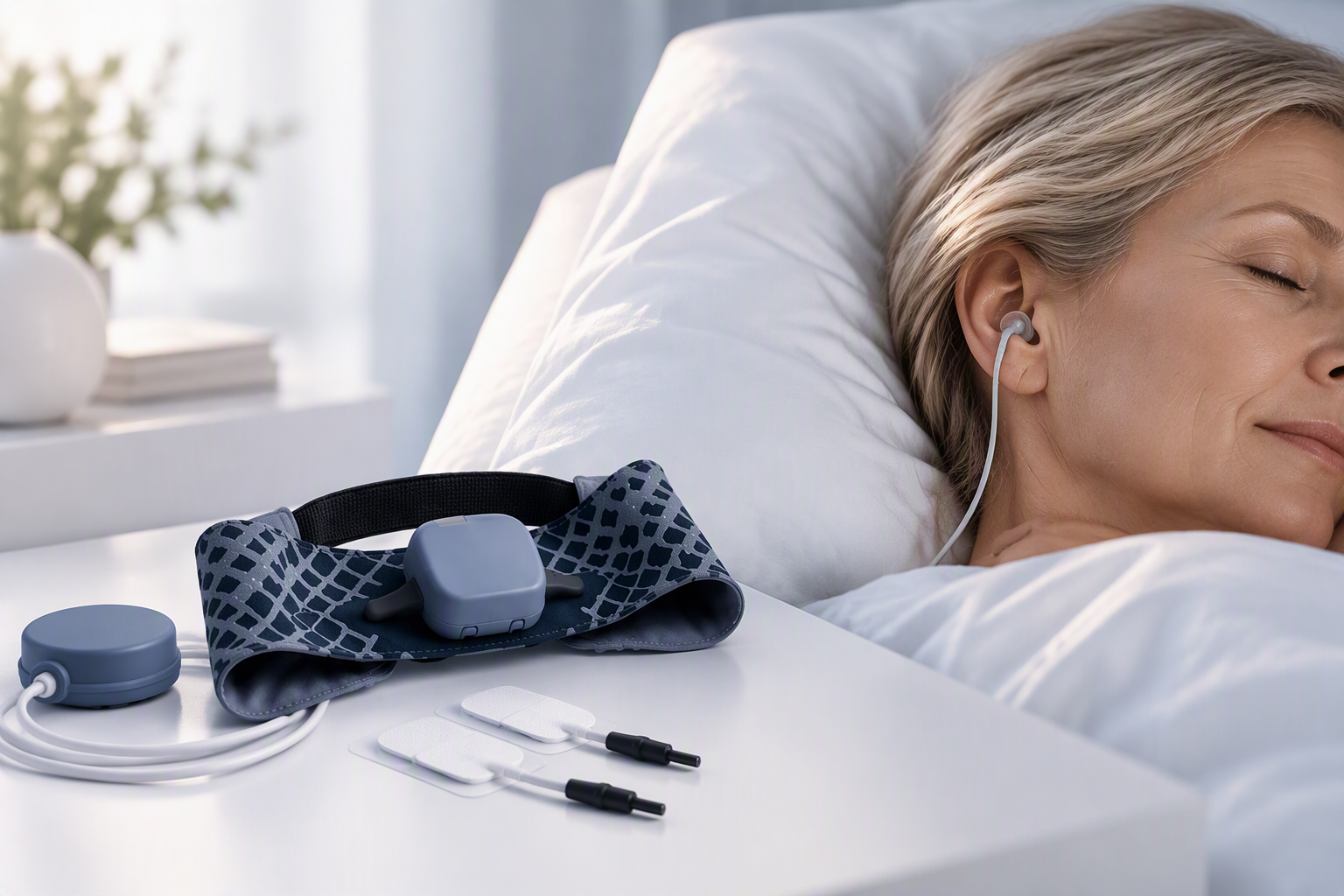
Vguard delivers controlled electrical impulses to the auricular branch of the vagus nerve. The signal is transmitted through structures in the brainstem to neural networks involved in processes including attention, learning, and memory.
Stimulation is delivered through electrodes positioned in a specific area of the outer ear and does not require surgery or the implantation of any stimulating components.
The Role of Theta Oscillations in Memory Processing
Theta rhythm is a natural pattern of electrical brain activity associated with learning and memory processes. Its activity in the hippocampus is particularly important, as the hippocampus is a brain structure involved in the formation and consolidation of new information.
Research conducted during the development of Vguard focused on the effects of vagus nerve stimulation on hippocampal activity, including type II theta rhythm.
Why does this matter?
Understanding the relationship between vagus nerve stimulation, hippocampal activity, and theta rhythm provided one of the scientific foundations for the development of Vguard technology.
Publications:
Brain Research 1675, November 2017, Pages 41-50
Brain Res Bull. 147, Apr 2019, pages 110-123
Brain Res Bull. 152 Oct 2019, pages 236-245

From the Neurophysiology of Memory to Medical Technology
Vguard was developed through years of research combining memory neurophysiology, medicine, and biomedical engineering. The development of the technology was based on research into the effects of vagus nerve stimulation on hippocampal activity and theta rhythm.
This knowledge was used to develop a non-invasive neuromodulation technology applied during sleep, intended for use in the treatment of Alzheimer’s disease and mild cognitive impairment.
The Vguard development program included successive stages of scientific evaluation, from mechanism-of-action and preclinical studies to a randomized, double-blind, placebo-controlled medical experiment.
Publications
- Broncel A., Bocian R., Kłos-Wojtczak P., Konopacki J. 2021, Noradrenergic Profile of Hippocampal Formation Theta Rhythm in Anaesthetized Rats
- Broncel A. ,Bocian R. , Kłos-Wojtczak P. , Kulbat-Warycha K. , Konopacki J. 2019, Vagal nerve stimulation as a promising tool in the improvement of cognitive T disorders.
- Broncel A., Bocian R., Kłos-Wojtczak P., Konopacki J. 2018. Medial septal cholinergic mediation of hippocampal theta rhythm induced by vagal nerve stimulation. Plos One. 5;13(11).
- Broncel A., Bocian R., Kłos-Wojtczak P., Konopacki J. 2018. Some technical issues of vagal nerve stimulation. An approach using a hippocampal formation theta rhythm. Brain Res Bull. 140:402-410.
- Broncel A., Bocian R., Kłos-Wojtczak P., Konopacki J. 2017. Vagus nerve stimulation produces a hippocampal formation theta rhythm in anesthetized rats. Brain Res. 1675:41-50.
- Broncel A, Bocian R, Kłos-Wojtczak P, Kulbat-Warycha K, Konopacki J. Brain Res Bull. 2020 Feb Vagal nerve stimulation as a promising tool in the improvement of cognitive disorders.
- Broncel A, Bocian R, Kłos-Wojtczak P, Konopacki J. Brain Res Bull. 2019 Oct Hippocampal theta rhythm induced by vagal nerve stimulation: The effect of modulation of electrical coupling.
- Broncel A, Bocian R, Kłos-Wojtczak P, Konopacki J. Brain Res Bull. 2019 Apr GABAergic mediation of hippocampal theta rhythm induced by stimulation of the vagal nerve.
- Broncel A., Konopacki J., Ben David T., Gałecki P., Ben-Menachem E., Krawczyk M., 2026, Nocturnal vagus nerve stimulation enhances cognitive functions in patients with early Alzheimer's disease, Journal of Alzheimer's Disease, vol 112